Jean
Earth AbidesJean, Ezra’s younger wife, is a self-willed survivor whose resistance to organized religion and fierce struggle to endure become central to how the aging community remembers her. She bears ten children, refuses to join its Sunday services, and survives the shock after the Great Disaster through the temper Ezra later describes as her way of fighting back at life. Her final years bring grave illness and suicide, but her story remains more than a record of suffering: Jean stands among the last links to the Old Times, and her independence persists in the memories of those left behind.
Arrival and Family
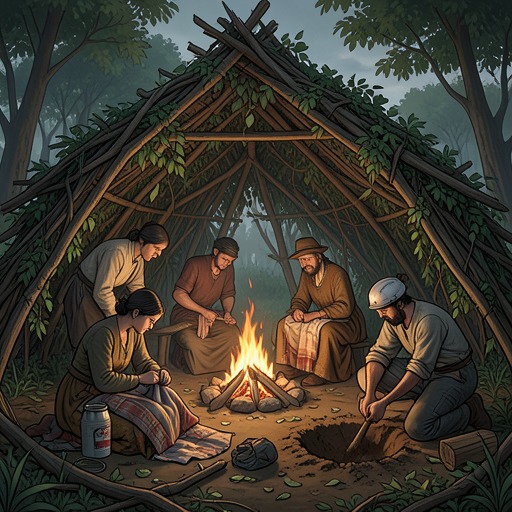
Jean enters the community in the Year 4, the Year of the Coming. After Ezra has been away for more than a year, he returns in a battered-looking car crowded with people and household goods. Alongside Molly, the older woman, Jean is introduced as his wife. Ezra identifies each woman that way calmly, without embarrassment. The arrangement is bigamy, but Ish’s initial shock quickly gives way to a practical assessment: in a society with few people, Ezra is capable of living comfortably with others under varied conditions, and plural marriage has precedents in earlier civilizations.
Jean arrives as part of a household taking shape in a world where old social arrangements have lost their former setting. The text establishes her as Ezra’s younger wife, but gives her own convictions and conduct more emphasis than the details of the marriage. Later, she has ten children, seven of whom are still alive when Ish considers the adults and families around him. Her large family places her at the heart of the community’s continuation across generations, while her individual outlook prevents her from being reduced to that domestic role.
Religion and Independence
Jean had belonged to a loud-praying modern sect called Christ’s Own. The Great Disaster marked a break with that faith: she had seen the congregation pray in vain as catastrophe struck, and afterward became definitely anti-religious. Her rejection is rooted in a specific experience of religious failure, rather than in a stated general argument about belief.
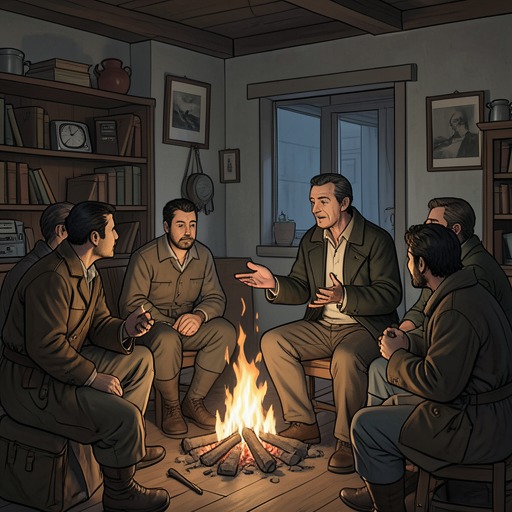
When George and Maurine propose Sunday services for the children, the gathering attempts a modest common practice: hymns, Bible readings, and silent prayer. Ish considers whether such services might offer comfort and strengthen unity, but he does not believe in the religious foundation he would need to lead them honestly. Jean’s response is more direct. She maintains her hostility and never attends. The services do not unite the household; they deepen its divisions, and Ish eventually ends them by describing the indefinite continuation of silent prayer as something each person can carry on inwardly as they wish. Molly weeps at the thought, and the experiment ends peacefully, but Jean’s absence has already exposed the limits of manufactured consensus.
Jean’s refusal also distinguishes her from the other adults in Ish’s view. She has a mind of her own, as her opposition to church services demonstrates, yet Ish does not regard her as a source of new ideas. That contrast matters: her independence is not presented as intellectual leadership or as a program for remaking society. It is a refusal to perform belief she no longer holds, and a capacity to resist that Ezra later understands as one of the reasons she endured.
Children, Loss, and the Epidemic
In the Year 11, both Molly and Jean bear children. Molly’s baby dies at birth, a painful first for a community whose women have become skilled at helping one another through childbirth. The account records Jean’s delivery in the same year but does not describe its outcome there. Later, Ish notes that she has borne ten children, seven still living, evidence of the family she has raised amid the community’s precarious conditions.
During the typhoid outbreak, Jean—called Jeanie in the account of the episode—comes wailing hysterically over the death of a child. Em says little, yet her presence gives Jean courage to go away and continue fighting. The scene reveals Jean in acute grief, without making her grief a sign of surrender: she leaves with renewed strength to carry on. The outbreak also tests the community’s most intimate bonds, as death and fear spread through households whose survival depends on mutual care.
Final Years and Remembrance
By the time Evie dies, Jean is one of the five remaining members of the original group. She is among the youngest of those five, and age shows less in her than in Molly, Ezra, or Em. That relative youth offers no protection from illness. One year Molly dies suddenly from what the others take to be heart failure; in that same year a great tumor grows rapidly within Jean. No one knows how to help her. Jean dies by her own hand, and no one blames her.
Her death belongs to the gradual passing of the survivors who remember the Old Times. The younger people scarcely miss Evie when she dies, but the older generation understands such deaths as broken links to the former world. Jean’s passing likewise leaves the community diminished by the loss of one of its original survivors, even as children and young families continue around Ish. The contrast between the aging adults and the lively younger generations sharpens the sense that a historical boundary is closing, not that life itself has ended.
Ezra later explains Jean’s survival after the Great Disaster as a consequence of her temper and her refusal to stop fighting life. The judgment is affectionate but not sentimental: it recognizes a hard-won resilience rather than claiming that she escaped grief or hardship. Her story holds together resistance and vulnerability. She rejects a faith whose prayers failed her, raises a large family, mourns a child during the epidemic, and ultimately faces an illness no one can treat. In the memories of the survivors, Jean remains both the woman who would not go to church and one of the people who fought back at life.